The Hidden Risks Behind Wide-Turn Truck Accidents in North Carolina
Wide-turn truck accidents present risks that many drivers across North Carolina don’t fully anticipate. On busy corridors like I-40 near Raleigh, I-85 through Greensboro, or surface roads weaving through Uptown Charlotte, large commercial trucks often require extra space to complete turns safely. When that space overlaps with nearby traffic, the result can be sudden, devastating collisions. These incidents reveal the hidden dangers of wide turns—hazards that are not always obvious until it’s too late.
Passenger vehicles, cyclists, and pedestrians are especially vulnerable. A car traveling straight through an intersection in Durham, a cyclist riding near downtown Asheville, or a pedestrian crossing near a shopping district in Wilmington may assume a truck will stay in its lane. Instead, the truck’s trailer can swing outward or inward, creating unexpected points of impact commonly seen in commercial truck collisions.

Because these crashes often involve complex movement patterns, liability is rarely straightforward. Accident reconstruction evidence plays a critical role in understanding speed, angles, blind spots, and turning radius.
LawyerPower® – The Law Office of Mark Farbman approaches wide-turn truck accidents with detailed investigation and technical insight, helping injured individuals uncover what really happened and pursue clarity after serious commercial trucking incidents.
What Is a Wide-Turn Truck Accident?
A wide-turn truck accident occurs when a large commercial vehicle needs extra space to complete a turn, and that movement intersects with nearby traffic. Unlike passenger cars, tractor-trailers, delivery trucks, and other heavy vehicles experience off-tracking, meaning the rear wheels follow a shorter path than the front of the truck. This difference in turning radius creates hidden dangers for drivers, cyclists, and pedestrians who may not realize how much space a truck actually needs.
Why Large Trucks Require Extra Turning Space
Commercial trucks are built with long wheelbases and articulated trailers, which limit maneuverability. When a truck turns—especially to the right—the trailer can swing into adjacent lanes or onto shoulders. In left turns, the cab may drift wide before the trailer follows. These movements are a common factor in commercial truck collisions, particularly when surrounding traffic assumes the truck will stay within marked lanes.
Where Wide-Turn Crashes Commonly Happen
Across North Carolina, these incidents frequently occur at busy intersections in cities like Fayetteville, Concord, and Chapel Hill, where multiple lanes converge. Urban streets near downtown districts, industrial loading zones, and tight delivery corridors also present elevated risk. Roads connecting to interstates such as I-77 or feeder routes near US-64 often see increased truck traffic, making wide-turn truck accidents more likely in these areas.
Because these crashes involve complex vehicle movement, accident reconstruction evidence is often essential to determine how off-tracking occurred and why nearby motorists were placed in harm’s way.
How Wide-Turn Truck Accidents Happen
Wide-turn truck accidents often unfold in seconds, but they are usually the result of multiple contributing factors coming together. On North Carolina roadways—from intersections near Downtown Raleigh to industrial corridors in Gastonia or feeder roads connecting to I-95—these crashes highlight the hidden dangers associated with large commercial vehicles navigating tight spaces.
Swinging Wide Before a Turn
To complete a turn safely, truck drivers may swing left before turning right or take an extra-wide arc during left turns. When surrounding traffic does not anticipate this movement, nearby vehicles can be struck or forced into curbs, medians, or other obstacles. These maneuvers are a common starting point in many commercial truck collisions.
Passenger Vehicles in Blind Spots
Large trucks have extensive blind spots along their sides and rear. A car traveling alongside a truck in places like High Point or New Bern may be completely invisible to the driver. When the truck begins a wide turn, the smaller vehicle can become trapped, leading to sideswipes or crushing impacts.
Improper Signaling or Lane Positioning
Failure to signal early, drifting between lanes, or positioning the truck incorrectly can confuse surrounding drivers. In busy areas such as Mooresville or along arterial routes like US-421, this confusion increases the risk of wide-turn truck accidents.
Road Design, Speed, and Distraction
Tight intersections, limited signage, and complex lane layouts can magnify risk, especially when speed or driver distraction is involved. Evaluating accident reconstruction evidence helps clarify how these factors combine and why the crash occurred.
Why Wide-Turn Truck Accidents Are Especially Dangerous
Wide-turn truck accidents pose a heightened level of risk because they combine limited maneuverability with extreme size and force. On North Carolina roads—from neighborhood intersections in Carrboro to multi-lane junctions near I-485 outside Charlotte—the hidden dangers of these crashes often catch road users by surprise. When a commercial truck turns wide, the consequences can be far more severe than a typical vehicle collision.
Size and Weight Disparity
Commercial trucks can weigh up to 80,000 pounds when fully loaded, dwarfing passenger cars, motorcycles, and bicycles. During wide turns, this imbalance means even low-speed contact can result in significant damage. This disparity is a defining factor in many commercial truck collisions, where smaller vehicles absorb the majority of the impact.
Sideswipe, Underride, and Crush Risks
Wide turns frequently lead to sideswipe incidents, where a vehicle is pushed sideways, or crush injuries, where a car becomes trapped between a truck and a curb, median, or other structure. In certain scenarios, underride risks also increase, particularly when a smaller vehicle is pulled beneath the trailer during the turning motion.
Severity of Injuries
Because of the forces involved, wide-turn truck accidents are more likely to cause serious or catastrophic injuries, including spinal trauma, head injuries, and multiple fractures. Recovery can be lengthy and life-altering, underscoring why these crashes demand careful investigation.
Elevated Risk to Pedestrians and Cyclists
Pedestrians crossing streets in areas like Boone or cyclists riding near urban corridors in Greenville face heightened danger when trucks swing wide. Evaluating accident reconstruction evidence helps clarify how these vulnerable road users were placed in harm’s way.
Common Injuries Caused by Wide-Turn Truck Crashes
Wide-turn truck accidents frequently result in serious, life-altering injuries because of the immense force involved when a commercial vehicle collides with a smaller road user. On North Carolina streets—from delivery routes in Huntersville to busy intersections near US-70 outside Goldsboro—the hidden dangers of these crashes often become clear only after devastating harm has occurred. These injuries are a defining feature of many severe commercial truck collisions.
Traumatic Brain and Spinal Cord Injuries
When a vehicle is sideswiped or crushed during a wide turn, occupants may strike interior surfaces or experience violent jolts. This can lead to traumatic brain injuries, herniated discs, or spinal cord damage. Such injuries often require long-term medical care and can permanently affect mobility, cognition, and independence.
Broken Bones and Internal Injuries
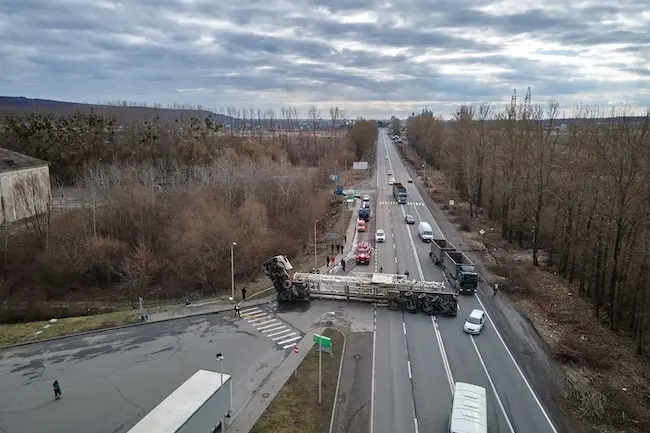
The sheer weight of a truck turning wide can cause multiple fractures, crushed limbs, and internal organ damage. Ribs, arms, legs, and pelvis injuries are common, particularly when a vehicle is pinned against a curb, barrier, or another car. These injuries are frequently documented through accident reconstruction evidence that shows how the impact unfolded.
Amputations and Permanent Disabilities
In the most severe wide-turn truck accidents, limbs may be crushed beyond repair, resulting in amputations. Even when amputation is avoided, permanent disabilities can alter a person’s ability to work or enjoy daily life, especially after complex commercial truck collisions.
Psychological and Emotional Trauma
Serious crashes often leave lasting emotional scars. Anxiety, sleep disturbances, and fear of driving are common after traumatic events, adding another layer to the hidden dangers of wide-turn incidents.
Who May Be Liable in a Wide-Turn Truck Accident
Determining liability in wide-turn truck accidents often requires a careful, multi-layered analysis. On North Carolina roads—from logistics hubs near Kannapolis to busy freight corridors along I-85 and surface streets in Wilson—these cases frequently involve more than one responsible party. Understanding who may be accountable is essential when uncovering the hidden dangers behind serious commercial truck collisions.
Truck Driver Negligence
A truck driver may be liable when a wide turn is made without proper signaling, adequate mirror checks, or awareness of blind spots. Speeding through turns or becoming distracted while navigating tight intersections can place nearby vehicles directly in harm’s way.
Trucking Company Responsibility
Trucking companies have a duty to enforce safe driving practices. If a company pressures drivers to meet tight schedules, ignores safety violations, or fails to address known risks associated with wide turns, it may share responsibility for wide-turn truck accidents.
Improper Training or Supervision
Operating large commercial vehicles requires specialized training. When drivers are not properly trained to handle off-tracking, urban intersections, or congested delivery areas, liability may extend beyond the individual driver. Evaluating training records is often part of reviewing accident reconstruction evidence.
Mechanical, Maintenance, and Third-Party Issues
Faulty brakes, steering systems, or worn tires can make wide turns more dangerous. In some cases, third-party maintenance providers, cargo loaders, or contractors contribute to unsafe conditions that lead to commercial truck collisions.
How Wide-Turn Truck Accidents Are Proven
Proving fault in wide-turn truck accidents requires a layered, evidence-driven approach that accounts for vehicle dynamics, driver behavior, and roadway design. These crashes often occur in complex settings—such as busy intersections in Downtown Winston-Salem, industrial corridors near US-17 in eastern North Carolina, or feeder roads connecting to I-440 outside Raleigh. Because the hidden dangers of wide turns are not always obvious to witnesses or first responders, strong cases are built by reconstructing exactly how the collision unfolded and why it was avoidable.
Analyzing the Accident Scene
The crash scene provides critical physical clues. Skid marks, yaw marks, debris fields, curb strikes, and the final resting positions of vehicles help establish speed, direction, and points of impact. In wide-turn truck accidents, scene analysis can show how far a trailer is off-tracked or whether a passenger vehicle was already established in its lane. This groundwork is essential in distinguishing unavoidable incidents from preventable commercial truck collisions.
Reviewing Dashcam, Surveillance, and Traffic Camera Footage
Video evidence often provides the clearest picture of a wide-turn event. Dashcams, traffic cameras at signalized intersections, and nearby business surveillance can capture lane positioning, turn signals, timing, and blind-spot conflicts. Footage from areas like downtown Hickory or retail corridors in Apex can confirm whether the truck swung wide without warning, strengthening the overall accident reconstruction evidence.
Examining Driver Logs and Electronic Data
Commercial trucks are equipped with electronic logging devices and event data recorders that track speed, braking, steering input, and hours of service. This data helps determine whether fatigue, distraction, or improper maneuvering contributed to the crash. Reviewing these records is especially important when wide-turn truck accidents occur during long delivery routes or tight schedules common in commercial truck collisions.
Using Accident Reconstruction Experts
Accident reconstruction specialists apply physics, engineering principles, and vehicle geometry to recreate the crash. By modeling turning radius, trailer swing, and blind spots, experts can demonstrate how the truck’s movement created hidden dangers for surrounding traffic. Their analysis often bridges the gap between raw data and a clear, understandable explanation of the fault.
Identifying Violations of Trucking Safety Regulations
Federal and state safety regulations govern driver training, vehicle maintenance, and safe turning practices. Violations—such as inadequate training on urban turns or failure to follow safety protocols—can further establish responsibility in wide-turn truck accidents.
Challenges in Truck Accident Claims
Pursuing recovery after wide-turn truck accidents can be significantly more complex than a typical traffic case. Across North Carolina—from freight routes near I-26 in the western mountains to port-adjacent roads around Morehead City and urban corridors in Cary—the hidden dangers of these crashes extend into the claims process itself. Understanding these challenges helps injured individuals recognize why careful strategy and early action matter in serious commercial truck collisions.
Aggressive Insurance Defense Tactics
Trucking companies and their insurers often respond quickly after a crash, deploying investigators and legal teams to limit exposure. Statements may be taken out of context, and liability may be shifted toward smaller vehicles or road conditions. Countering these tactics requires a strong factual foundation supported by accident reconstruction evidence and thorough investigation.
Rapid Loss of Critical Evidence
Key evidence can disappear quickly. Skid marks fade, vehicles are repaired or salvaged, and electronic data may be overwritten. Without prompt preservation, crucial details about speed, steering, and trailer movement can be lost—making it harder to demonstrate how wide-turn truck accidents unfolded and why they were preventable.
Navigating Federal and State Trucking Regulations
Commercial trucking is governed by a complex framework of safety rules that cover driver training, hours of service, vehicle maintenance, and safe turning practices. Understanding how these regulations apply to a specific crash is essential, especially when violations contribute to commercial truck collisions.
Multiple Liable Parties and Complex Investigations
Wide-turn crashes often involve multiple responsible parties, including drivers, trucking companies, maintenance providers, or cargo handlers. Untangling these relationships requires detailed investigation and coordination.
How LawyerPower® – The Law Office of Mark Farbman Builds Strong Truck Accident Cases
Successfully handling wide-turn truck accidents requires more than surface-level investigation. These cases demand precision, speed, and technical insight—especially on North Carolina roads where commercial traffic is constant, from industrial routes near I-40 outside Burlington to distribution corridors along US-74 through Monroe. LawyerPower® – The Law Office of Mark Farbman approaches these matters with a comprehensive strategy designed to uncover the hidden dangers behind serious commercial truck collisions.
Immediate Investigation and Evidence Preservation
Early action is critical. Physical evidence can disappear quickly, and electronic data may be overwritten. Immediate investigation allows key details—such as vehicle positions, turning paths, and trailer swing—to be documented before they are lost. Preserving this information forms the backbone of reliable accident reconstruction evidence in wide-turn truck accidents.
Collaboration With Industry and Reconstruction Experts
Truck crashes often involve complex vehicle dynamics. LawyerPower® works with experienced professionals who analyze turning radius, blind spots, and roadway geometry. These experts help translate technical data into clear explanations that show how the collision occurred and why it was preventable.
Strategic Negotiation With Trucking Insurers
Trucking insurers are well-resourced and prepared to defend claims aggressively. Effective negotiation requires detailed preparation and a clear presentation of evidence. By grounding discussions in documented facts, LawyerPower® helps counter attempts to minimize responsibility in commercial truck collisions.
Trial-Ready Preparation
Every case is prepared as if it will go to trial. This approach strengthens negotiating positions and ensures readiness if litigation becomes necessary.
Taking Action After a Wide-Turn Truck Accident in North Carolina
Wide-turn truck accidents are uniquely dangerous because they combine massive vehicles, limited maneuverability, and unexpected movement patterns that place others at serious risk. On North Carolina roadways—from neighborhood intersections in Mint Hill to commercial corridors along I-95 near Rocky Mount—the hidden dangers of these crashes can escalate quickly, leading to severe injuries and life-changing consequences. Understanding how off-tracking, blind spots, and roadway design contribute to commercial truck collisions is essential to recognizing why these incidents deserve scrutiny.

Acting quickly after a crash is just as important as understanding how it happened. Evidence can disappear, memories can fade, and critical electronic data may be lost without prompt preservation. Early investigation and reliable accident reconstruction evidence often make the difference between unanswered questions and clear accountability in wide-turn truck accidents.
If you or a loved one has been harmed in a truck crash involving a wide turn, you do not have to face the process alone. LawyerPower® – The Law Office of Mark Farbman is committed to uncovering the truth behind complex trucking cases and protecting the rights of those affected.
Contact LawyerPower® – The Law Office of Mark Farbman today to schedule a consultation (704) 542-1555 and take the first step toward clarity, accountability, and recovery.